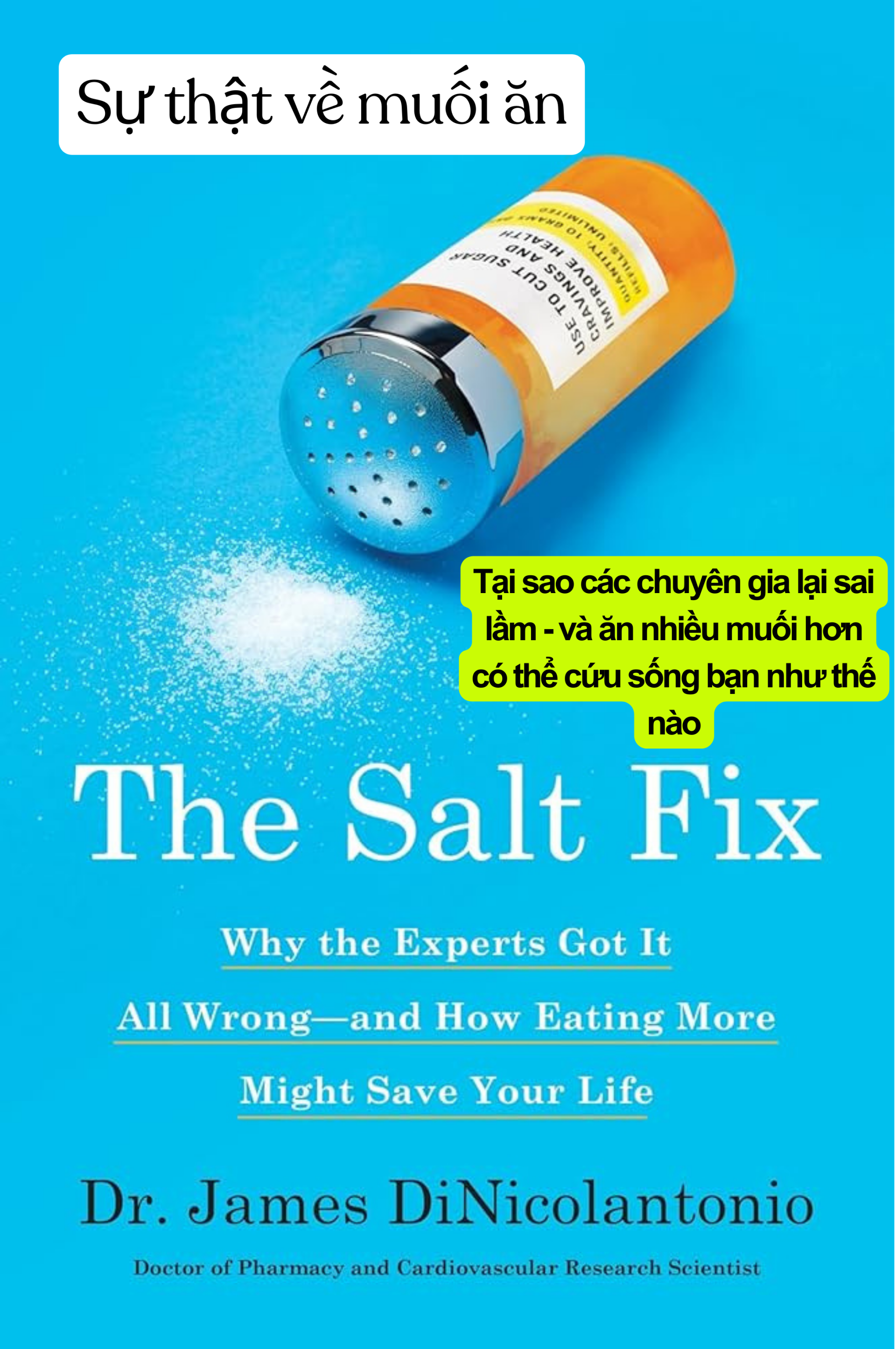
We are often advised to limit our salt intake to reduce the risk of high blood pressure, but is limiting salt really effective in preventing hypertension, and how does it affect other physiological functions of the body?
The information here is taken from the book "The Salt Fix: Why the Experts Got It All Wrong and How Eating More Might Save Your Life" by James J. DiNicolantonio. This book hasn't been translated and published in Vietnam yet, but I found it quite useful and wanted to share it with you.
According to some studies, about 80% of people with normal blood pressure (below 120/80 mmHg) are completely unaffected by the blood pressure-raising effects of salt.
Many people with normal blood pressure, pre-hypertension, and hypertension may even experience an increase in blood pressure if they restrict their salt intake. This is because when salt intake is severely restricted, the body begins to activate a rescue system that tries to retain more salt and water from the diet. These rescue activities include the renin-angiotensin-aldosterone system (known for increasing blood pressure) and the sympathetic nervous system (known for increasing heart rate).
Heart rate has been shown to increase when following a low-salt diet. This harmful effect occurs in almost everyone who restricts their salt intake. While this effect is more thoroughly documented in medical literature, no food advertisement or diet guide states that “A low-salt diet may increase the risk of an increased heart rate.” And what has a greater impact on your health: a one-point drop in blood pressure or a four-beat-per-minute increase in heart rate?
.png)
In other words, we focus only on one indicator that can change with a low-salt diet – blood pressure – but completely ignore all the other harmful effects in the process.
The harms of low salt are never considered. The conclusion that “reducing salt will save lives” is based solely on lowering blood pressure, without taking into account the harm of increased heart rate, triglycerides, cholesterol, and insulin levels.
And what does this lead to? The answer is: Increased risks of cardiovascular events, kidney failure, obesity, and diabetes.
If we're really concerned about the impact of salt intake on heart and cardiovascular health, then the increase in heart rate when salt is restricted is particularly worrying. Compared to the very small drop in blood pressure, the increased heart rate is alarming. Salt retains water in the body to a certain extent – but this is actually a life-saving property, not a harmful one. Eating enough salt allows your body to maintain normal blood pressure without having to activate a hormonal reservoir to compensate.
.png)
We are inherently salt-eaters.
We cry salt, we sweat salt, and the cells in our bodies are bathed in salty fluid. Without salt, we cannot live.
Just a tiny bit of salt can elevate the flavor of bland food, giving it a special taste.
Salt is essential for maintaining optimal blood volume in our bodies; it's even needed by the heart to pump blood throughout our bodies. Salt is necessary for digestion, communication between cells, bone formation and bone strength, and preventing dehydration. Sodium is also crucial for reproduction, the normal functioning of cells and muscles, as well as the optimal transmission of nerve impulses to and from organs like the heart and brain.
And there's something important for women: a low-salt diet can lower the basal metabolic rate and may contribute to accelerated aging.
.png)
The author cites numerous scientific studies, the history of low-salt recommendations, the harmful effects of low salt intake on health, the optimal salt intake for health, and who may have higher and lower salt needs.
I spent a considerable amount of time reading this book because it contained a lot of information that contradicted what I had heard before, so I needed to double-check the author's citations. I had previously heard about the energy balance method and how some people have recovered from illnesses using it (this method talks a lot about excess salt causing disease, the need to limit salt intake and eliminate excess salt). Additionally, I researched the Gerson Therapy by a German doctor named Max Gerson (I will introduce this later). He believed that salt was the root of many dietary health problems, so his therapeutic diet did not include salt, but instead used a lot of fresh fruits and vegetables to increase potassium intake and increase sodium excretion. I also heard a lot about the lemon-salt-warm water method, which involves drinking a lot of salt along with the lemon, and many people have seen improvements in their health. This book provides another interesting perspective on table salt, and especially clarifies the optimal salt intake for health.
A few words about the author:
Author James J. DiNicolantonio is a cardiovascular research scientist and Ph.D. in pharmacology at the Saint Luke’s Mid America Heart Institute (USA). A respected and internationally renowned scientist and expert in health and nutrition, he has contributed significantly to health policy and even testified before the Canadian Senate on the harmful effects of added sugar. Dr. DiNicolantonio serves as the Deputy Editor-in-Chief of Nutrition and Open Heart, a journal published in partnership with the British Heart Association (BMJ). He is the author or co-author of approximately 200 publications in the field of medicine. He is also a member of the editorial advisory boards of several medical journals.
You can find more information on his website at:www.drjamesdinic.com
Additionally, you can also check out Dr. Jason Fung's videos illustrating research on salt:Is salt actually bad for you?, Why Salt does NOT Increase Risk of Heart Disease?. Dr. Jason Fung has several well-known and highly-rated books, which I will introduce to you later.